
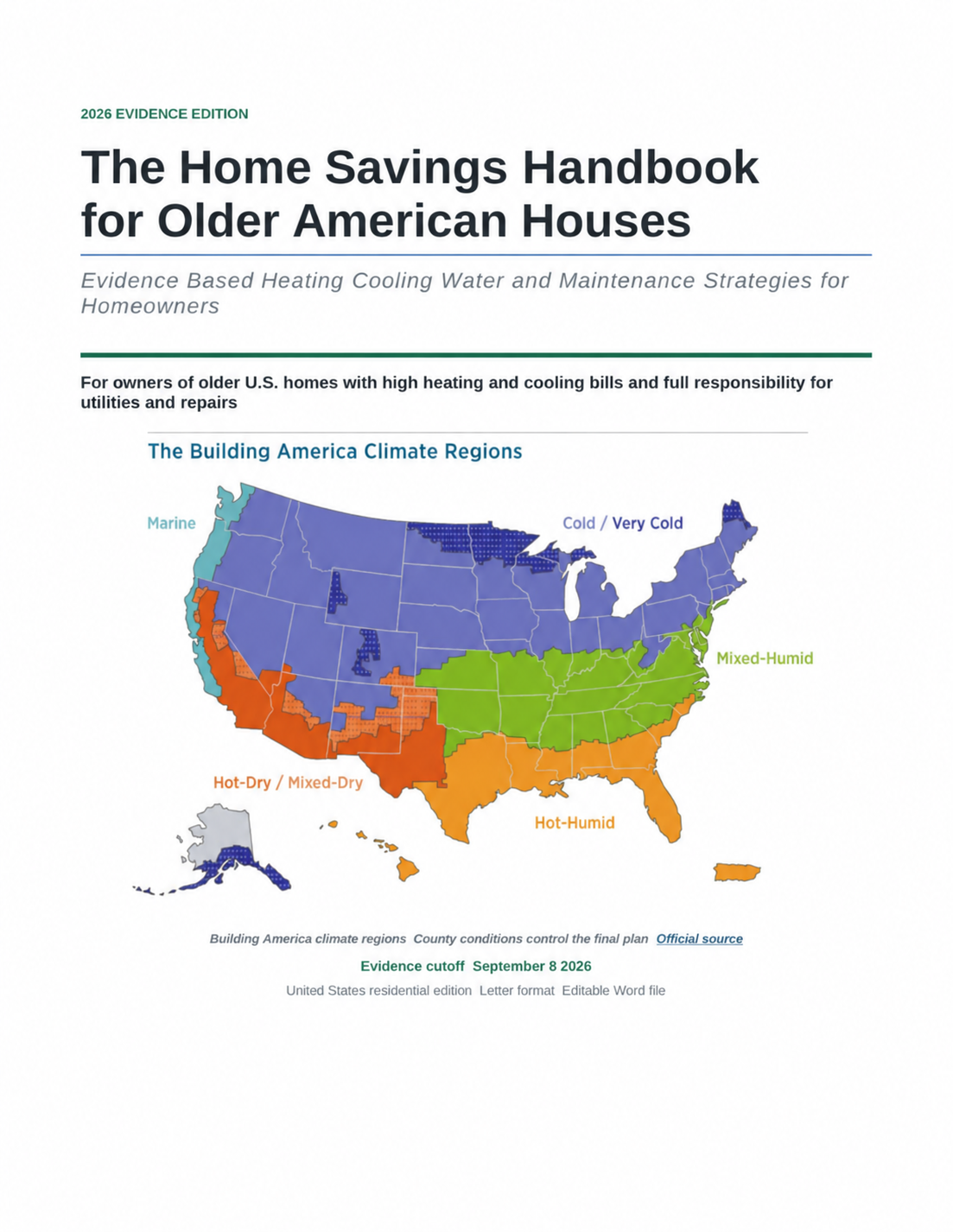
$19.90
The complete digital package
Three downloadable U.S. Letter PDFs, organized to move from a confusing bill or repair symptom to a better next step—without promising a one-size-fits-all savings result.
- 3 filesCore guide, climate reference, and workbook
- 84 pages44 + 22 + 18 pages
- Digital deliveryDownloadable after checkout
Included in your order
Three files, each with a job.
They are designed to be used together: the guide helps decide what to look at, the reference adds local context, and the workbook turns observations into a documented plan.
Core Action Guide
Build a bill baseline, investigate common house symptoms, and decide whether to maintain, repair, compare quotes, or wait.
- Utility, water, and comfort baseline
- Air leakage, insulation, HVAC, and water checks
- Maintenance and project-priority framework
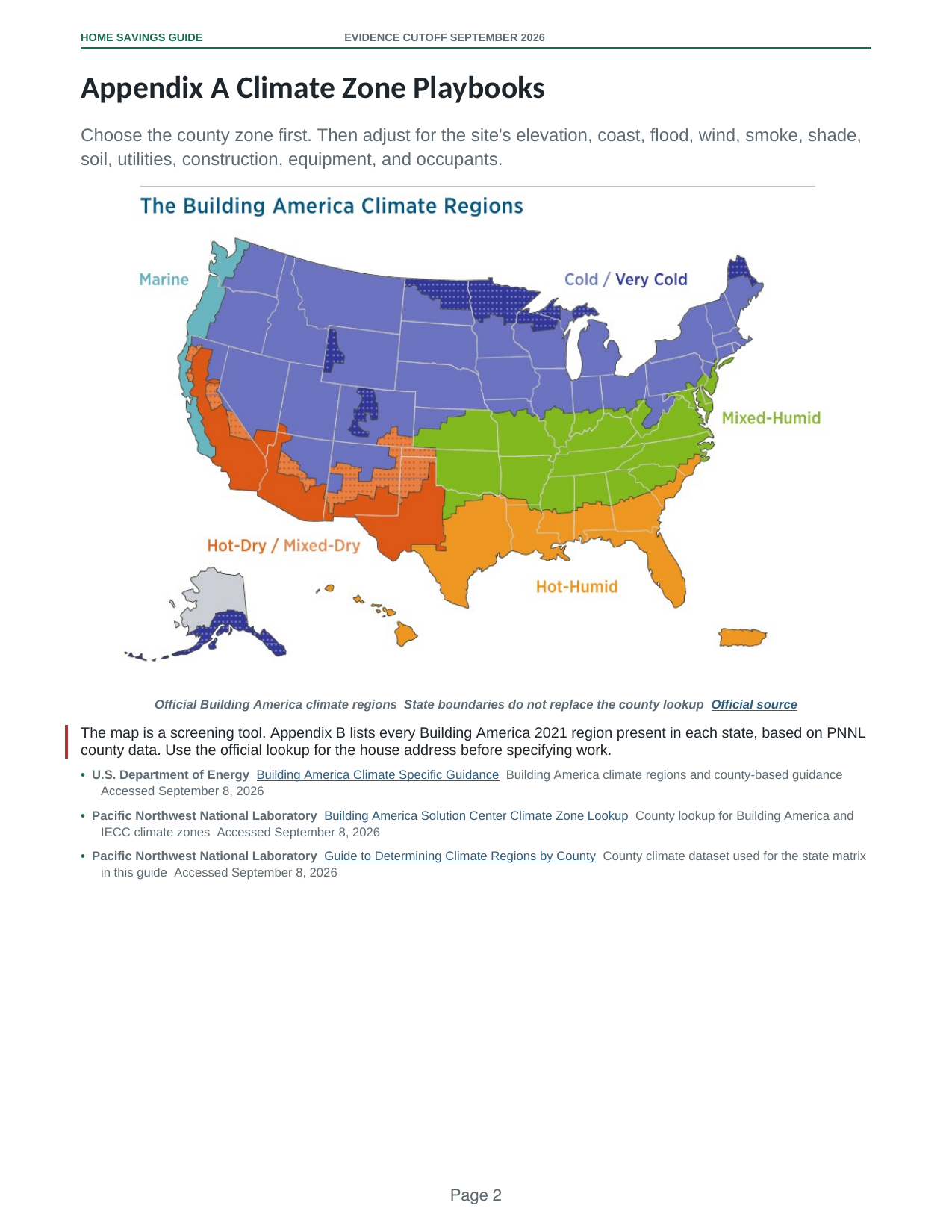
Climate & Evidence Reference
Use climate, state, district, and house conditions to understand where generalized guidance stops applying.
- Eight climate playbooks
- Source notes and evidence context
- Prompts for local utility and code checks
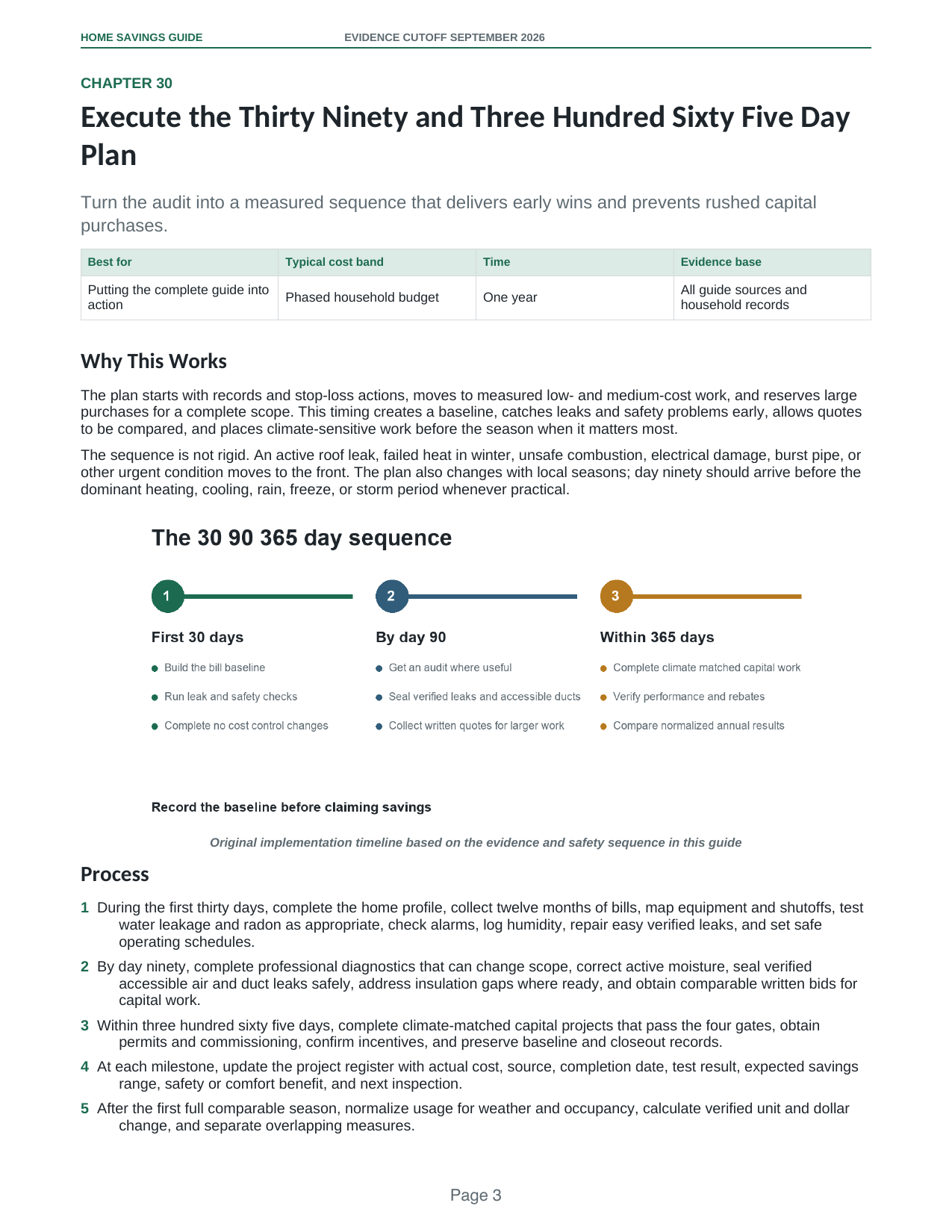
Homeowner Workbook
Printable working pages for observations, project comparisons, contractor quotes, and a realistic action plan.
- Room-by-room observation pages
- Project and quote comparisons
- 30-, 90-, and 365-day planning sheets
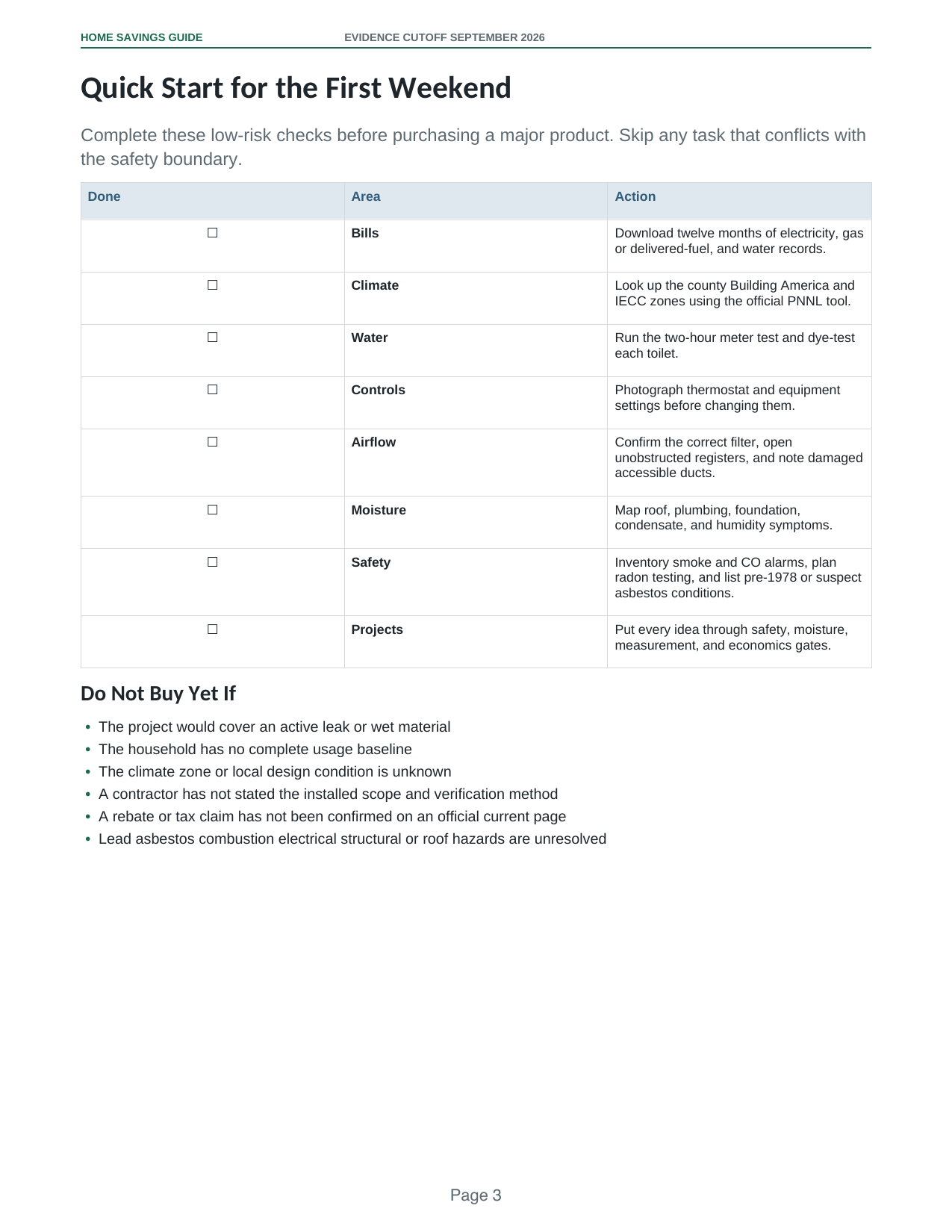
Actual pages
See what you will receive.
These are rendered pages from the current three-PDF edition, not decorative mockups.
The workflow
Measure. Inspect. Prioritize.
The handbook does not begin with a product recommendation. It gives you a sequence for narrowing down the real problem first.
Measure
Build a twelve-month baseline from utility use, weather, water, comfort, and room-by-room clues. This separates a pattern from a one-off bill.
Inspect
Separate air leakage, insulation, equipment, moisture, and maintenance issues before choosing a remedy or scheduling a large project.
Prioritize
Put safety and active damage first. Then compare cost, climate fit, evidence, scope, and how finished work will be verified.
Contents at a glance
Six action areas.
The core guide moves from a house-wide baseline to specific systems, then to larger spending decisions.
Measure before spending
Understand older-home costs, build a 12-month baseline, audit the whole house, and rank projects by evidence.
Seal and insulate the building
Find air leaks, improve insulation, consider windows and doors, and avoid creating moisture problems.
Reduce heating and cooling cost
Map equipment, restore airflow, improve controls, lower demand, and compare repair with replacement.
Control water and water heating
Check leaks, fixtures, hot-water use, and water-damage risks before a small problem becomes a major repair.
Prevent expensive failures
Maintain roofs, drainage, basements, appliances, and important safety boundaries in an older house.
Spend with evidence
Compare written scopes and quotes, identify available programs, define safe DIY limits, and plan the next year.
A good fit
Built for people who carry the bills and decisions.
Homeowners can use the complete system to investigate operating costs, plan maintenance, compare contractor quotes, and decide whether a major upgrade is justified.
Renters who pay their own utilities can use the bill analysis, observation, comfort, water, and low-risk action sections. Building alterations, equipment work, and permanent changes require landlord approval.
Evidence and limits
Useful guidance, without false certainty.
The handbook translates public guidance from the U.S. Department of Energy, ENERGY STAR, the U.S. EPA, the U.S. EIA, Pacific Northwest National Laboratory, and other public authorities into a household decision workflow.
Rates, rebates, leases, local codes, equipment conditions, and building construction can change the right answer. Renters should obtain permission before making changes. Electrical, combustion, structural, mold, asbestos, lead, radon, and similar safety concerns may need qualified local professionals.
Delivery
Digital, immediate, and yours to use at home.
After successful checkout, the order email or customer portal provides access to all three PDF files. Read them on a device or print workbook pages for your own household use.